With the increasingly popularity of software as a service (SaaS), enterprise software vendors today cannot afford to be without a cloud strategy. As a result, traditional vendors have introduced various forms of hosted, hybrid, and SaaS deployment options. These co-exist alongside the vendor’s traditional on-premises license model.
But software as a service is more than just another deployment option, another way to consume software. SaaS is a business model. SaaS not only affects the product: it should drive the nature of how the provider does business, from how the product is developed and maintained to how it is sold, implemented, and supported. It should permeate the very culture of the provider’s organization.
How should the business model of a SaaS provider be different from that
of a traditional software vendor? There are at least six aspects.
Read the rest of this post on the Strativa blog: Beyond Deployment Options: SaaS as a Business Model.
Since 2002, providing independent analysis of issues and trends in enterprise technology with a critical analysis of the marketplace.
Monday, July 06, 2015
Wednesday, June 17, 2015
Big Changes at Microsoft Dynamics
In a letter to Microsoft employees today, CEO Satya Nadella announced a major restructuring of its business, including what is essentially a disbanding of Microsoft Business Solutions (MBS), the group responsible for Microsoft Dynamics.
Now, some observers and some competitors will be tempted to say that Microsoft is abandoning its Dynamics products. But, in our view, it would be more accurate to say that the Dynamics products are becoming a more integral part of Microsoft’s overall portfolio. There are three arguments in favor of this positive view of Dynamics.
Read the full post on the Strativa blog: Microsoft Unbundles Its Dynamics Business Unit
- Dynamics product development teams will now report up into the new Cloud and Enterprise unit (see above)
- Dynamics sales and partner relationship organizations will now report to Kevin Turner, Microsoft’s Chief Operating Officer
- Dynamics marketing functions will now be handled directly by Microsoft’s CMO, Chris Capossela, and his team.
Now, some observers and some competitors will be tempted to say that Microsoft is abandoning its Dynamics products. But, in our view, it would be more accurate to say that the Dynamics products are becoming a more integral part of Microsoft’s overall portfolio. There are three arguments in favor of this positive view of Dynamics.
Read the full post on the Strativa blog: Microsoft Unbundles Its Dynamics Business Unit
Sunday, June 07, 2015
The Problem with ERP Requirements Templates
Companies undertaking a new ERP vendor selection often begin the
effort by using a standard template of ERP system requirements. Though
requirements checklists may appear to be a time-saving way to get to a
requirements specification, this approach can actually make the project
longer and cost more than it should. Moreover, use of requirements
templates can actually lead to the wrong ERP system being selected.
In this post, we identify the problems with the use of ERP requirements templates and outline a better way for specifying requirements for new ERP systems.
Read the rest of this post on the Strativa blog: The Problem with ERP Requirements Templates.
In this post, we identify the problems with the use of ERP requirements templates and outline a better way for specifying requirements for new ERP systems.
Read the rest of this post on the Strativa blog: The Problem with ERP Requirements Templates.
Saturday, May 30, 2015
Oracle Sued by Customer over Source Code Access
Oracle was hit by a customer lawsuit earlier this month in conjunction
with its MICROS Systems business, which Oracle acquired in 2014.The dispute involves access to the source code for the MICROS Open Commerce Platform. Aero maintains that when it licensed OCP, MICROS (not yet acquired by Oracle) knew that Aero intended to build customizations and new features to integrate with OCP.
Aero alleges that MICROS personnel represented that Aero would have ongoing access to OCP source code in order to build its customizations and maintain them going forward.
Although we do not yet know all of the facts, there is a lesson in this case for companies seeking to become digital businesses.
Read the rest of this post on the Strativa blog:
Oracle Sued by Customer over Access to MICROS Source Code
Monday, May 18, 2015
Web Commerce: The Great Equalizer
Since the mid-1990s, it’s been easy to see how web commerce has disrupted many traditional business models. Early on, Amazon disrupted traditional bookstores, and Netflix disrupted video stores. More recently, Uber is disrupting the taxi industry, and AirBnB is threatening the traditional hospitality industry.
But what’s not so apparent is how web commerce has become the great equalizer for small businesses. This is true in at least three ways.
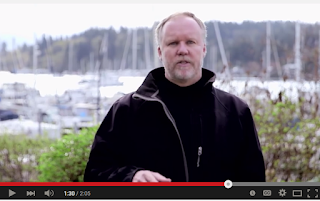
I made a note of Nelson’s remarks, and didn’t think much about them until I attended a reception for press and industry analysts later that evening. There, I found myself chatting with John Baker (CEO) and Alan Blackford (COO) of Thos. Baker, a supplier of outdoor furniture. They told me that NetSuite was working on a video about their business. After the reception, Baker sent me the pre-publication video link and I found it an inspiring story.
In the video, Baker tells how he had been commuting to his tech industry job in Seattle for many years, but he aspired to do something interesting that would allow him to work close to his family on Bainbridge Island. So, he started his outdoor furniture business to combine his interest in technology with his interest in design.
Baker points out that setting up web commerce for this sort of business is quite complex. His operational strategy makes extensive use of outsourced manufacturing, with furniture frames stocked in the warehouse on Bainbridge Island, the cushions from a supplier in Alabama, the umbrellas from California, the fire pits from Tennessee. Though the supply chain is complex, but the integrated system allows the firm to appear to its customers as if it were a much large company. When we are talking to our customers, they are comparing us to companies that are somewhere between 40 to 400 times our size,” he said.
Click the image below to watch the video. It’s a promotional video for NetSuite, of course. But it’s an inspiring story nonetheless.
Just how small is Thos. Bros? I believe the firm has just five employees, and all of them appear in the video.
NetSuite Manufacturing: Right Direction, Long Road Ahead
But what’s not so apparent is how web commerce has become the great equalizer for small businesses. This is true in at least three ways.
- Market presence. Traditional marketing channels, such as broadcast media, print advertising, and direct mail, required substantial budgets. Today, a small supplier with a well-designed and well-functioning e-commerce website and good natural search results can rank right up there with major brands.
- Global reach. Prior to the commercialization of the Internet, it took substantial investment for a supplier to grow its business internationally. But today, even the smallest manufacturer can be found by prospects in overseas markets. Using international distributors and third-party logistics, small suppliers today can more easily serve buyers around the globe.
- Cost efficiency. Economies of scale still count in making and distributing physical products. But a well-functioning e-commerce site that is integrated with back-end systems, such as ERP, can cut costs for small suppliers. Combined with cloud systems on the back-end, small businesses can enjoy productivity gains from information systems without having to support a large IT staff.
Small Companies Acting Bigger
In NetSuite's most recent user conference, CEO Zach Nelson touched briefly on this point. He said something to the effect that, with its integrated ERP and e-commerce capabilities, NetSuite was helping small companies act bigger. (He also said that it was equally important to help large companies act smaller, but that’s a thought for another post).I made a note of Nelson’s remarks, and didn’t think much about them until I attended a reception for press and industry analysts later that evening. There, I found myself chatting with John Baker (CEO) and Alan Blackford (COO) of Thos. Baker, a supplier of outdoor furniture. They told me that NetSuite was working on a video about their business. After the reception, Baker sent me the pre-publication video link and I found it an inspiring story.
In the video, Baker tells how he had been commuting to his tech industry job in Seattle for many years, but he aspired to do something interesting that would allow him to work close to his family on Bainbridge Island. So, he started his outdoor furniture business to combine his interest in technology with his interest in design.
Baker points out that setting up web commerce for this sort of business is quite complex. His operational strategy makes extensive use of outsourced manufacturing, with furniture frames stocked in the warehouse on Bainbridge Island, the cushions from a supplier in Alabama, the umbrellas from California, the fire pits from Tennessee. Though the supply chain is complex, but the integrated system allows the firm to appear to its customers as if it were a much large company. When we are talking to our customers, they are comparing us to companies that are somewhere between 40 to 400 times our size,” he said.
Click the image below to watch the video. It’s a promotional video for NetSuite, of course. But it’s an inspiring story nonetheless.
Just how small is Thos. Bros? I believe the firm has just five employees, and all of them appear in the video.
Related Posts
NetSuite Enhances Its Manufacturing FunctionalityNetSuite Manufacturing: Right Direction, Long Road Ahead
Labels:
e-commerce,
NetSuite,
web commerce
Sunday, April 26, 2015
Infor ERP Customers and the UpgradeX Roadmap
I was at Infor’s headquarters in New York City recently for Infor’s Innovation Summit, its annual event for industry analysts. It’s a good two day briefing, packed with a lot of information on Infor’s broad portfolio of products and its many new initiatives, along with access to all of its top executives.
One of my goals was to see what kind of progress Infor has been making on its CloudSuite program, and especially its UpgradeX initiative, which is aimed at upgrading Infor’s existing customer base to current versions deployed in the cloud. In our ERP selection consulting services, we often see Infor as the incumbent provider, so knowing the details of these offerings is important in understanding options for these clients going forward.
But Infor faces two challenges. First, it must convince a greater share of its 70,000 customers to upgrade to its latest versions. Then, if it does convince them, Infor will need to have the implementation resources trained and available to support those customer migrations.
Read the rest of this post on the Strativa website: Infor ERP Customers and the UpgradeX Roadmap
One of my goals was to see what kind of progress Infor has been making on its CloudSuite program, and especially its UpgradeX initiative, which is aimed at upgrading Infor’s existing customer base to current versions deployed in the cloud. In our ERP selection consulting services, we often see Infor as the incumbent provider, so knowing the details of these offerings is important in understanding options for these clients going forward.
But Infor faces two challenges. First, it must convince a greater share of its 70,000 customers to upgrade to its latest versions. Then, if it does convince them, Infor will need to have the implementation resources trained and available to support those customer migrations.
Read the rest of this post on the Strativa website: Infor ERP Customers and the UpgradeX Roadmap
Tuesday, March 24, 2015
With Manufacturing ERP, the Best UI is No UI
Among industry analysts, there is much talk these days about smart devices. The story is that information technology is being embedded in a host of products, from your household thermostat to your wristwatch to your toothbrush. These smart devices can be connected to each other and to cloud-based systems, resulting in an Internet of Things (IoT) that enables a whole host of new products and services. They also throw off enormous quantities of data—big data—that can be analyzed for insights and predictions and further leveraged for information-based services.
All this is new and exciting. But there’s one industry where smart devices are very old news: manufacturing.
Yet, for the most part, today’s ERP systems do not leverage those smart devices on the factory floor. In the typical factory, the intelligence of the factory equipment is used almost exclusively by manufacturing engineers, process engineers, and quality assurance professionals to control production. But when it comes to recording transactions for production control, inventory, or accounting, they are often performed by human operators hand-entering the data.
Read the rest of this post on the Strativa blog: With Manufacturing ERP, the Best UI is No UI→
All this is new and exciting. But there’s one industry where smart devices are very old news: manufacturing.
Yet, for the most part, today’s ERP systems do not leverage those smart devices on the factory floor. In the typical factory, the intelligence of the factory equipment is used almost exclusively by manufacturing engineers, process engineers, and quality assurance professionals to control production. But when it comes to recording transactions for production control, inventory, or accounting, they are often performed by human operators hand-entering the data.
Read the rest of this post on the Strativa blog: With Manufacturing ERP, the Best UI is No UI→
Friday, March 20, 2015
Beyond Business Systems to Business Transformation
Over the past several years, we’ve seen a subtle shift in our consulting work at Strativa. Years ago, clients would ask us to facilitate an ERP or CRM vendor selection, a business process improvement project, or various types of IT assessments. Our consultants still do those types of projects, of course.
But today, increasingly, clients are asking us to help them in a more holistic way. Increasingly, they are not just looking for a new system or for business process improvement. They are looking to see how new technologies can enable new business models, how they should rethink their whole applications portfolio to support changes in their businesses, and how they should redesign or simplify business processes to take advantage of new technologies.
Enterprise Software Vendors Need a Broader Focus
I attend a number of vendor conferences and analyst briefings every year. My goal in attending these events is primarily to keep up on the latest capabilities of each vendor, so that we can best qualify them for short listing for our clients. As much as vendors like to talk about business transformation, most of what I see at vendor events is more narrowly focused on features/functions of vendor products. The best try to inspire their customers about the vendor’s product road map. The worst are just sales events, with networking opportunities and parties thrown in.
So, when I planned my attendance at Microsoft’s annual Convergence conference this week, I was expecting more of the same. But after the first keynote, something felt different.
Read the rest of this post on the Strativa website: Beyond Business Systems to Business Transformation
But today, increasingly, clients are asking us to help them in a more holistic way. Increasingly, they are not just looking for a new system or for business process improvement. They are looking to see how new technologies can enable new business models, how they should rethink their whole applications portfolio to support changes in their businesses, and how they should redesign or simplify business processes to take advantage of new technologies.
Enterprise Software Vendors Need a Broader Focus
I attend a number of vendor conferences and analyst briefings every year. My goal in attending these events is primarily to keep up on the latest capabilities of each vendor, so that we can best qualify them for short listing for our clients. As much as vendors like to talk about business transformation, most of what I see at vendor events is more narrowly focused on features/functions of vendor products. The best try to inspire their customers about the vendor’s product road map. The worst are just sales events, with networking opportunities and parties thrown in.
So, when I planned my attendance at Microsoft’s annual Convergence conference this week, I was expecting more of the same. But after the first keynote, something felt different.
Read the rest of this post on the Strativa website: Beyond Business Systems to Business Transformation
Sunday, March 15, 2015
Where in the World? At the IT Financial Management Conference!
If you are an IT executive or responsible for an IT budget, you should consider attending the IT Financial Management association conference this year, April 13-17, in Pittsburgh.
For my research firm, Computer Economics, this conference is right up our alley. So, John Longwell and I will both be giving presentations at the conference this year. John, our VP of Research, will be speaking on Long Term IT Trends and What They Mean for Your Organization. Here's the abstract:
Long-term economic and technology trends are creating new challenges for IT financial management. These trends include the declining cost of hardware, the shift in the spending mix to software and ongoing support, the use of contingency workers, the outsourcing of IT services, the impact of cloud computing, and the increase in IT spending outside the IT budget. Based on over 25 years of research, this presentation will outline the impact of these long term trends and provide practical recommendations to take advantage of them.My presentation will be on Best Practices for Benchmarking Your IT Budget. Here's the abstract:
Benchmarking is a popular way for IT organizations to justify their IT budgets and focus their efforts for continuous improvement. But CIOs are often unhappy with or question the validity of the results. Based on benchmarking exercises with clients over the past decade, this session will outline three complementary approaches to benchmarking. Best practices will be described for defining peer groups, selecting key metrics, understanding variations by industry and organization size, analyzing gaps, and translating findings into actions.Registration details are on the ITFMA website.
Related Links
Computer Economics IT Spending and Staffing BenchmarksSunday, February 22, 2015
ERP Selection Is Not Just About Vendor Selection
When an organization decides to look for a new ERP system, consultants and vendors often refer to that effort as an "ERP selection project." Sometimes they will refer to it as ERP vendor selection, or an ERP vendor evaluation, but the idea is the same.
I've been advising companies on ERP selection since 1989, and my consulting firm Strativa has been doing ERP selection consulting since 2000. After many such projects, I've come to the conclusion that the whole process is misnamed. Why? Because referring to the effort as an ERP vendor selection project makes the choosing the right system the primary objective.
Does this mean that it's not important for an organization to select the right system or the right vendor? Of course not. But picking the right vendor is only a small part of what organizations need in these projects.
What Organizations Need in ERP Selection Projects
So what should ERP selection projects include, in addition to ERP vendor selection? Here are a few critical needs:- Forming a team. I'm always concerned when the ERP selection decision is driven primarily by the IT organization. Part of the ERP selection effort has to be to to draft key leaders from the business side of the organization.
- Gaining executive sponsorship. ERP selection is a major business change initiative. Without executive sponsorship, the project will go nowhere. An early activity, therefore, is to ensure that top management is behind the effort.
- Business and IT strategy. Many ERP selections arise from organizations changing their business model, acquiring new lines of business, or expanding into new markets. To provide context, ERP selection should start with a review of the current and future business strategy and how IT is aligned to support it.
- Applications systems road map. Many of our clients have dozens of systems in addition to ERP, and many of them are connected to the ERP system. Should those systems stay or go? Most organizations would do well to first address the entire portfolio of applications and lay out a strategic road map to understand the impact of a new ERP system.
- Application platform decision. Will the new ERP system be deployed on-premises, be hosted by a service provider, or will it be a true cloud system? The choice here will also have implications for the applications road map.
- IT organizational impact. Does the current IT organization have the needed skills to support the future applications road map, including the new ERP system? If not, what new skill are needed and how should the IT staff be organized? Many of our ERP selection projects include side projects for skills acquisition.
- Defining key requirements. It goes without saying, if you don't know what makes your business different from others, or what makes software vendors different from one another, it's difficult to pick the right system. Defining key issues should precede creation of the vendor short list.
- Unbiased evaluation of current ERP system. Sometimes insiders, being so familiar with the shortcomings of the organization's existing ERP system, assume that a new system is the only solution. In our ERP vendor selection consulting, however, we find a small percentage of projects where the current system is the best choice, perhaps with a version upgrade. A truly independent ERP selection consultant will include the current system for consideration.
- Choosing an implementation partner. ERP vendor selection is not the only decision: most organizations will need to select an ERP implementation partner. Having the right ERP system but the wrong ERP implementation consultant rarely leads to success.
- Negotiating contracts. ERP selection does not end with picking the right system. There are ERP software license agreement, implementation consulting agreements, and in many cases these days there are contracts and service level agreements for hosting partners or cloud services providers. Your legal counsel can address legal terms and conditions, but most lawyers do not have a clue about broader issues of technical agreements. Contract review and negotiation is another key activity in ERP selection projects.
- ERP implementation planning. Generally, the ERP implementation partner has a good handle on the activities it must perform, but the ERP selection team must also plan for the activities required on the client side, such as training, data conversion, procedure writing, and acceptance testing. Planning for client-side staffing is also a key need.
- Business case approval. You can pick the right vendor and negotiate fair agreements, but if your own organization does not see the business value, the project will not be approved. ERP selection projects often need to include business case preparation, in business terms.
- Business process improvement. ERP systems can involve major changes in business processes--hopefully for the better. The ERP selection team should also anticipate the business process improvement needed as part of the new system.
- Change management. ERP implementations rarely fail because of technology problems (though, it does happen). ERP implementation projects often fail because of organizational resistance to change. How you engage the organization during ERP selection is how you gain buy in for the decision, setting the stage for cooperation during the implementation.
Free ERP Selection Is Not Free
The fact that organizations need much more than picking the right vendor hasn't stopped some service providers and consultants from focusing on it, however. Since the 1990s, consultants have been advising buyers on how to create a short list and pick the right system.The free vendor evaluation websites are the worst offenders. I won't name them, but you can find them in any Google search for "ERP selection." Most have just one service: creating a short list of ERP vendors for you to consider. What they don't tell you is that their service is free because these sites make money is by selling your contact information to the very same vendors that they are short listing for you. They are not advisory services for buyers, they are lead generation services for vendors.
Some companies come to us for ERP selection consulting after they've used these free vendor selection websites. Invariably, we find the prospect has already been flooded with phone calls and emails from vendors that were referred to them by the vendor evaluation websites. It only makes our job that much harder while we are trying to focus on the other 90% of what it takes to make an ERP selection project successful.
Buyers Are Getting Smarter
Ironically, while clients come to us for help in ERP selection, I'm finding that the area where they need the least help is in identifying vendors for their short list. By the time clients reach out to us they've already done quite a bit of homework online and networking with associates to find out who the popular vendors are. In some recent deals, I've had new prospects rattle off a list of other companies in their industry and what ERP systems they are running.Invariably, however, we usually know of a few vendors that should be short-listed that the client hasn't heard of. In addition, the client may have misconceptions about what certain vendors are good at, or not good at. Nevertheless, I'm finding buyers today are much more knowledgeable than ever about the ERP vendor landscape.
At the same time, clients are realizing their needs beyond selection. They have all heard the stories of multi-million dollar ERP failures, and they realize that not all the blame can be placed on the ERP vendors or the ERP implementation consulting firms. They are much more aware of their needs and making ERP selection much more than vendor evaluation.
Even if they still refer to their efforts as ERP selection projects.
Related Posts
Strativa Resource: Trends in ERP and How to Ensure SuccessA Guide for Cloud ERP Buyers
Subscribe to:
Comments (Atom)